In short: pizza combines fast carbs with a lot of fat and protein, so it often gives a small early rise followed by a bigger, stubborn climb three to six hours later. That delayed spike is why pizza is one of the hardest meals to dose for in type 1 diabetes, and why the answer is individual rather than a fixed rule.
Pizza is one of the more frustrating meals to manage in type 1 diabetes. You dose, you eat, your CGM looks fine for a couple of hours, and then, long after the plates are cleared, your glucose starts climbing and won't come down. If pizza and blood sugar have never quite made peace for you, you're not alone.
The good news: the pizza spike is one of the most predictable patterns once you understand it. This is why it happens, what makes pizza uniquely tricky, and how to learn your own pizza response.
Quick answer
Pizza raises blood sugar in two stages. The crust is fast carbohydrate, so it can nudge glucose up early. Then the fat and protein from the cheese, oil, and toppings slow digestion and prompt the liver to release glucose, driving a larger rise three to six hours later. A single up-front insulin dose is shaped for the early bump and often misses the late one, which is why pizza is so hard to cover.
A note before we start: this article explains why pizza affects blood sugar and what people discuss with their care teams. It is not a dosing guide and doesn't tell you how much insulin to take. Pizza dosing is individual, and getting it wrong can cause lows, so it belongs with your diabetes team.
In this article
- Why pizza spikes blood sugar
- Why pizza is uniquely hard to dose for
- What the pizza spike looks like on a CGM
- What actually changes your pizza response
- What people try (with their care team)
- How to find your own pizza response
- FAQ
Why pizza spikes blood sugar
Pizza is basically a delivery system for the exact combination that produces a delayed glucose rise: fast carbohydrate plus a heavy load of fat and protein, all on one plate.
- The crust is refined carbohydrate. On its own it would spike glucose early, within the first hour, like most fast carbs.
- The cheese and oil bring a lot of fat. Fat slows how quickly your stomach empties and appears to reduce insulin sensitivity for several hours, so the carbs arrive gradually and your insulin does a little less than usual.
- The cheese and any meat bring protein. In type 1 diabetes, a large protein load prompts the liver to release extra glucose over the following hours.
Put those together and you get a two-stage response: a modest early rise from the crust, then a larger, slower climb from the fat and protein that can run for hours. This is the same mechanism behind why blood sugar rises hours after eating any high-fat, high-protein meal. Pizza is simply the meal that stacks all of it into one of the most concentrated packages you can order.
Why pizza is uniquely hard to dose for
Plenty of meals are fatty, and plenty are high in protein. Pizza is hard because it's high in both at once, on top of fast carbs, and because the effects add up.
Research in type 1 diabetes has shown the fat and protein effects are additive: a meal high in both pushes glucose higher and for longer than either would alone (Smart et al., 2013). Clinical reviews describe high-fat, high-protein meals needing insulin delivered differently, not just in a larger amount (Bell et al., 2015; Wolpert et al., 2013).
That's the core of the problem. A normal mealtime bolus delivers most of its action in the first two hours, exactly when the pizza spike is at its smallest, and it has faded by the time the big delayed rise arrives. Cover the crust and you tend to go low early and then high late; cover the late rise and you risk going low before it appears. Usually it's this timing mismatch that makes pizza feel impossible, not carb counting.
What the pizza spike looks like on a CGM
The pizza pattern has a recognizable shape, which is the first step to handling it.
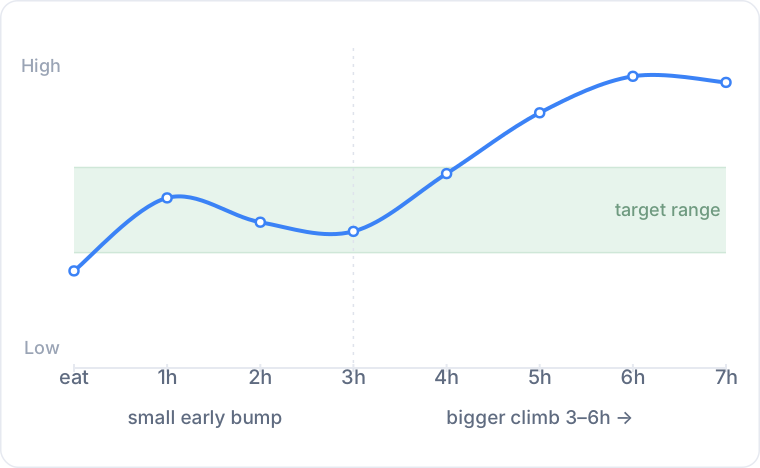
If you've read our guide to reading CGM patterns, this is a textbook delayed-rise shape. The tell is timing: the trouble shows up in the evening or overnight, hours after a meal that looked handled at the two-hour mark.
What actually changes your pizza response
"Pizza" isn't one thing, and neither is your response to it. A few variables move the curve a lot, which is why one person's approach won't transfer cleanly to another:
- Crust. A thin, crispy crust has less carbohydrate than a thick or deep-dish base, so the two behave differently.
- Toppings. A plain margherita is a different meal from a meat-loaded, extra-cheese pizza. More fat and protein means a bigger, later rise.
- Portion. The effects scale with how much you eat. Two slices and half a pizza are not the same problem.
- Sides and drinks. Garlic bread, a sugary soft drink, or a beer each add their own timing.
- Activity. A walk after dinner, or an active day beforehand, changes how your body handles the same meal.
None of this means pizza is off the menu. It means the meal is variable, so a repeating pattern for your usual pizza is worth far more than any general rule.
What people try (with their care team)
There's no single correct way to dose for pizza, and even the research is mixed on the best approach. These are the levers people commonly discuss with their diabetes team. They are options to explore together, not instructions, because the specifics can cause lows if they're wrong.
- An extended or combo bolus. On a pump, splitting the dose so part is delivered up front and the rest is stretched over the following hours is the classic approach to a delayed rise. We cover the concept in what an extended bolus is. How to split and for how long is individual.
- Pre-bolus timing. Giving insulin a head start before eating can help the early crust carbs, separate from the delayed rise.
- Injections (MDI). Without a pump you can't extend a dose the same way, but some people use a later top-up. This needs closer guidance to stay safe.
- Watching the tail. Whatever the approach, the action is in hours three to six, so that's the window to keep an eye on.
The point of the conversation is to match your insulin to the shape of your pizza curve, which is exactly what your CGM data can show.
How to find your own pizza response
This is the part you can act on tonight, safely, without changing a single dose: gather data.
- Pick your usual pizza and eat it the way you normally would, with your normal dose.
- Watch the full six hours on your CGM, not just the two-hour mark. Note when the delayed rise starts and how high it goes.
- Do it again next time with the same pizza, and see whether the same shape returns.
- Bring the pattern to your care team. Two or three curves of the same pizza behaving the same way turn "pizza wrecks me" into a specific, solvable dosing question.
That record is the difference between guessing and knowing. Once you can see your own pizza curve, the strategies above stop being abstract and become something your team can tune to you.
How Glynce helps you see the pattern
Glynce doesn't calculate insulin or tell you how to dose. What it does is make your pizza response visible.
When you log the meal, Glynce lines your glucose curve up against it, so the delayed climb shows clearly instead of hiding in the evening. Comparing several pizza nights side by side is what reveals your pattern, and that pattern is exactly the evidence that makes a conversation with your care team productive. The dosing decision stays with you and your clinician; Glynce just helps you see what your pizza actually does.
Frequently asked questions
Does pizza raise blood sugar?
Yes, and usually in two stages. The crust raises glucose early like other fast carbs, and then the fat and protein drive a larger, delayed rise that can last for hours. The delayed part is what catches most people out.
Why does pizza spike my blood sugar hours later?
Because fat slows digestion and a large protein load prompts the liver to release glucose over several hours. That pushes much of pizza's effect into the three-to-six-hour window, well after a normal mealtime dose has done most of its work.
How much insulin should I take for pizza?
That's individual and not something to take from an article, because the wrong amount or timing can cause a low. Many people with type 1 diabetes find pizza needs insulin delivered differently, often part up front and part extended, but the specifics should be worked out with your care team using your own data.
Is thin-crust pizza better for blood sugar than deep-dish?
Generally a thin, crispy crust has less carbohydrate than a thick or deep-dish base, so it tends to produce a smaller carb rise. The fat and protein from cheese and toppings still contribute a delayed rise, so crust is only part of the picture.
Does cauliflower crust avoid the spike?
A lower-carb crust reduces the early carb rise, but if the pizza is still loaded with cheese and toppings, the fat and protein can still produce a delayed climb. It often helps, but it doesn't always remove the late rise.
Keep reading
- Why Your Blood Sugar Rises Hours After Eating (Fat and Protein Explained). The mechanism behind the pizza spike, for every fatty meal.
- What Is an Extended Bolus, and Why Do Fatty Meals Need One?. The delivery approach people discuss for delayed rises.
- How to Read a CGM: Meaning of Glucose Trends, Arrows, and Patterns. Where the pizza pattern fits among the others.
This article is for education, not medical advice, and it is not a dosing guide. Insulin dose and timing changes carry a real risk of hypoglycemia. Always work with your diabetes care team before changing how you dose for a meal.
Sources
- Smart CE, et al. Both dietary protein and fat increase postprandial glucose excursions in children with type 1 diabetes, and the effect is additive. Diabetes Care, 2013.
- Bell KJ, et al. The role of dietary protein and fat in glycaemic control in type 1 diabetes: implications for intensive diabetes management. Current Diabetes Reports, 2015.
- Wolpert HA, et al. Dietary fat acutely increases glucose concentrations and insulin requirements in patients with type 1 diabetes. Diabetes Care, 2013.