Daily goals
Daily diabetes goals you do not have to remember
Pick from a catalogue of daily goals for glucose, meals, movement, and the upkeep around them. Nearly all of them track themselves from your CGM and Apple Health.
Download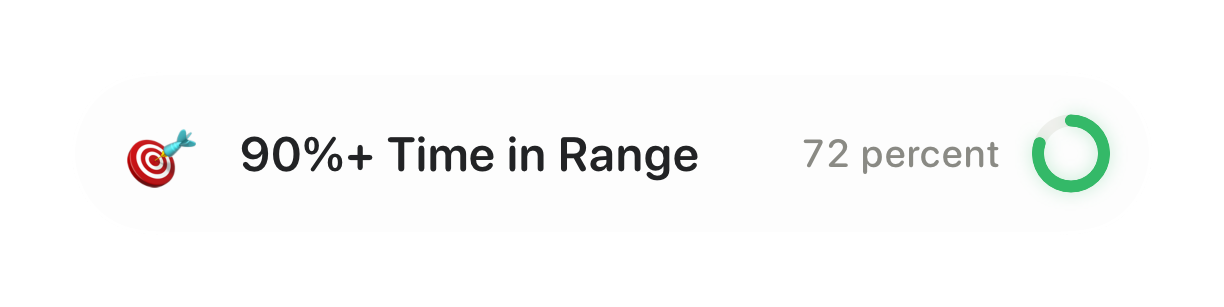
Daily goals
Pick from a catalogue of daily goals for glucose, meals, movement, and the upkeep around them. Nearly all of them track themselves from your CGM and Apple Health.
Download
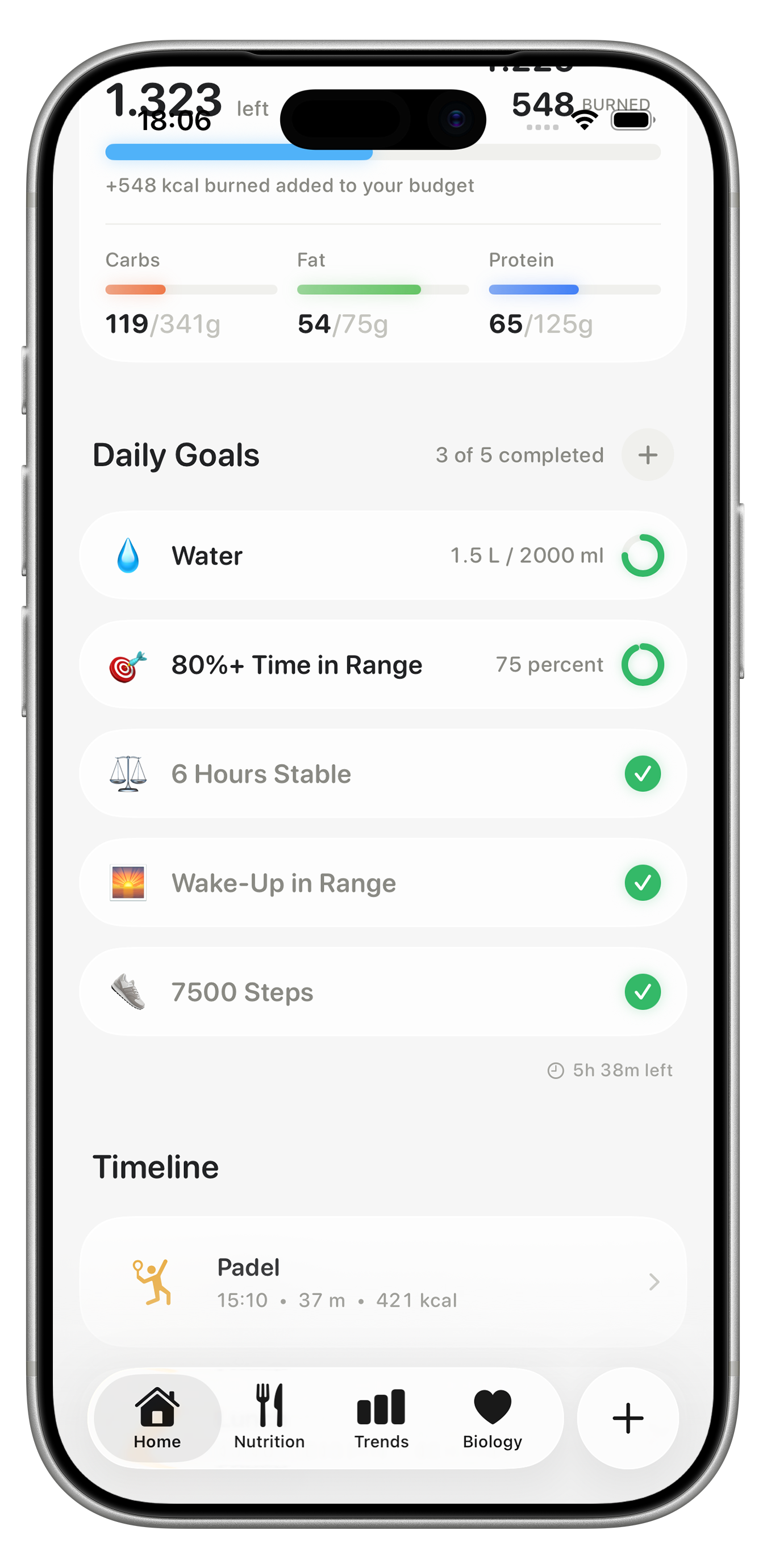
Pick what you are working on. Every glucose and movement goal fills itself in from your CGM or Apple Health, so hitting one costs you no extra tapping.
Time in Range targets at 70%, 80%, or 90%, no lows today, no highs today, six hours stable, waking up in range, going to bed in range. The bulk of the catalogue, because it is the bulk of the work.
Land back in range two hours after breakfast, lunch, or dinner. Or keep the rise after any meal flat, whatever you ate. These read the meals you log.
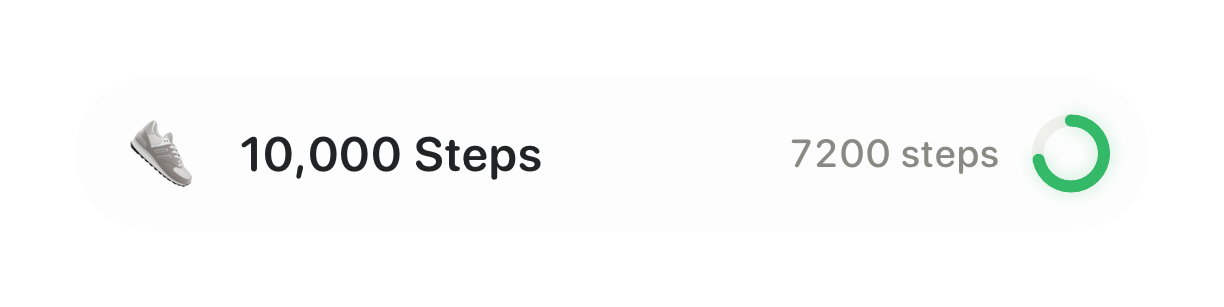
Step counts from three thousand to twenty thousand, a walk after dinner, moving every hour, exercise minutes, stand hours, calories burned. All tracked from Apple Health without you starting anything.
The unglamorous ones: rotate your site, swap the sensor, change the infusion set, calibrate, restock before you run out, plus a monthly eye screening and foot check.
You are already doing the work. A goal is only worth having if it makes the work land somewhere.
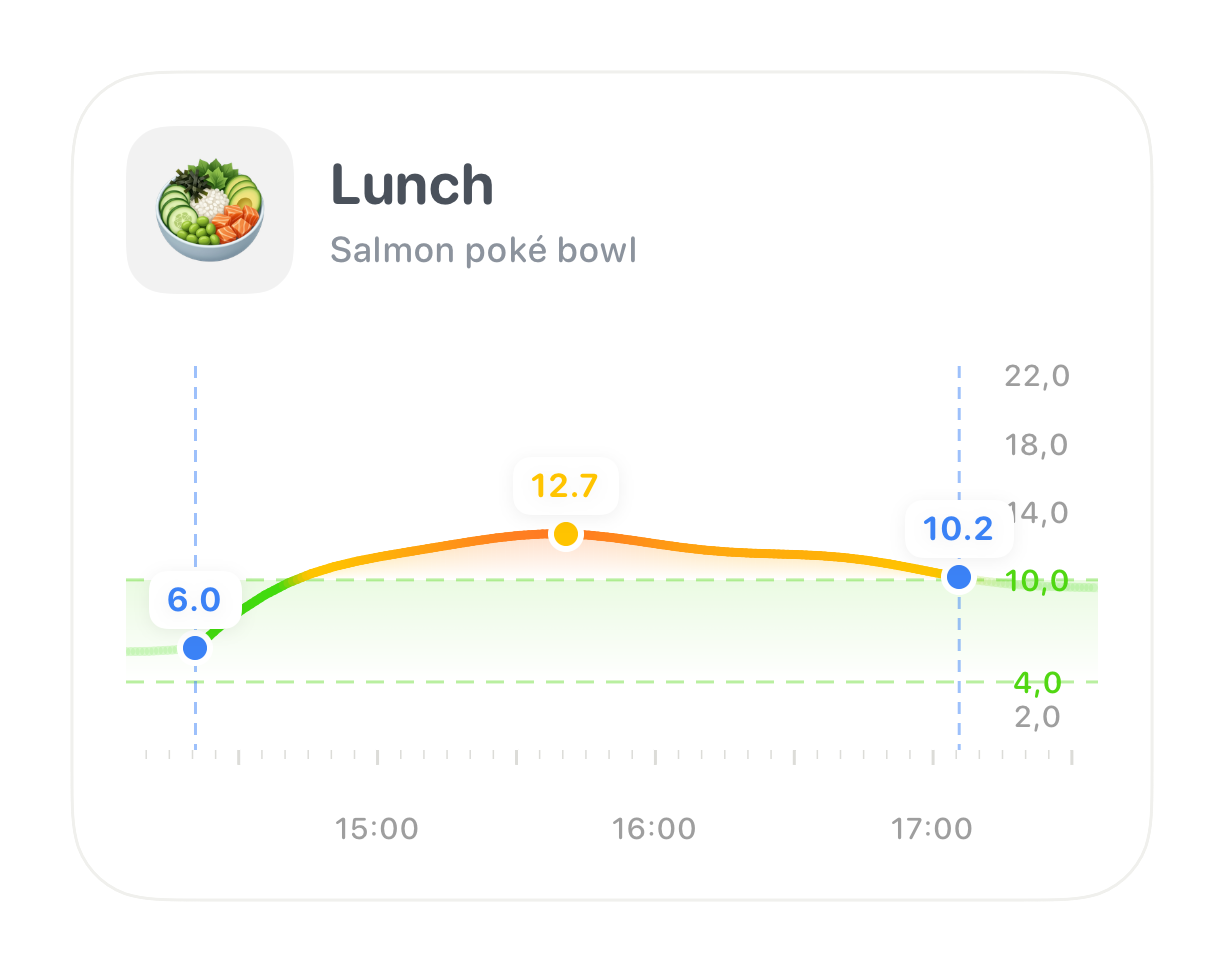
A Time in Range target tells you how the day went. A post-meal goal tells you what to do differently at the next meal, which is a far shorter feedback loop.
Glynce finds the meals you logged today, waits the full two hours, then checks where you actually landed against your own target range. The flat-line goal is stricter and asks a different question: not where you ended up, but whether the rise on the way there stayed under about 2.2 mmol/L, roughly 40 mg/dL. Log lunch, and by mid-afternoon you know whether that lunch worked.
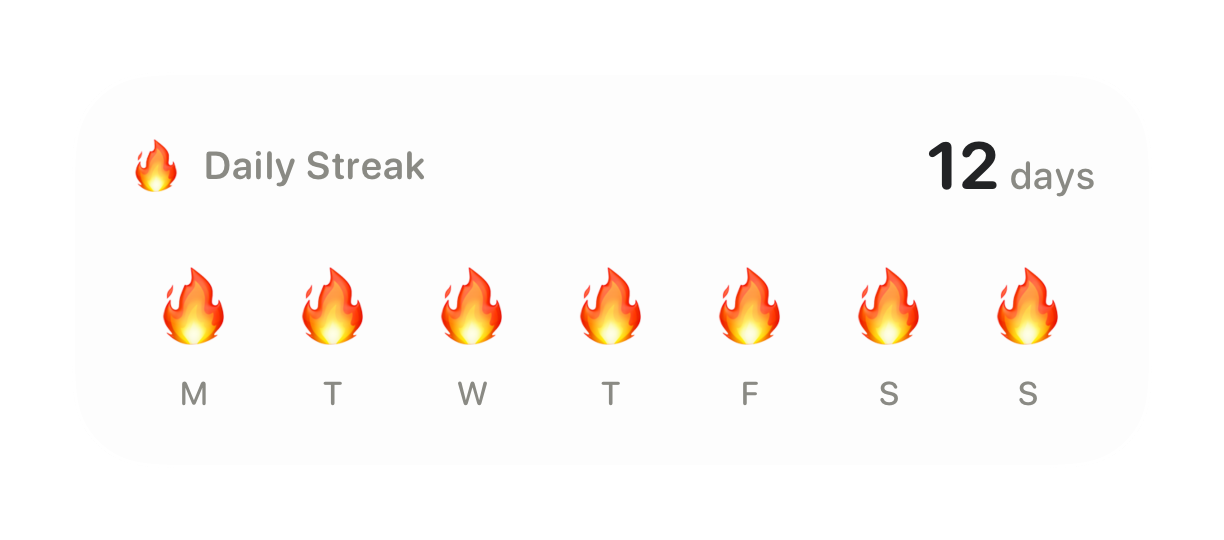
Glynce counts the days you open it. Come back on a new day and the streak grows. Skip one and it starts again at one, with no freeze to buy and no repair to earn.
It is not tied to hitting your goals, and that matters more than it sounds. A streak that broke because your glucose misbehaved would be punishing you for the disease rather than the habit. Diabetes hands out enough of that already. This one only asks that you looked.
One on the free tier, five with Glynce Plus. The whole catalogue is available either way, so the tier changes how many you can run rather than which ones you can choose from. Worth knowing: if you keep the water goal on your dashboard, it takes the free slot.
Almost never. Every glucose goal is worked out from your readings and every movement goal from Apple Health, which is forty-eight of the fifty-six. Only the upkeep goals need a tap, because no sensor can tell that you rotated your site.
They read the meals you log. Glynce takes the moment the meal started, waits two hours, and checks whether the reading at the end of that window sits inside your target range. The flat-line goal instead measures the rise from the meal to its peak and passes if it stayed under about 2.2 mmol/L, roughly 40 mg/dL. If you do not log the meal, there is nothing for the goal to measure.
Not opening Glynce for a whole day. The streak counts consecutive days you showed up, not goals you completed, so a bad glucose day cannot cost you it. If you do miss a day it restarts at one. There is no grace day and no way to repair it.
For some of them. The glucose and post-meal goals need readings, whether those come from a sensor or from readings you add by hand. The movement goals only need Apple Health, and the upkeep goals need neither.
Free on iPhone
Download