In short: blood sugar can rise three to six hours after eating when a meal is high in fat and protein. Fat slows digestion and protein prompts your liver to release glucose, producing a delayed rise that a normal mealtime bolus often misses.
You counted the carbs. You dosed on time. Dinner was salmon, avocado, a little rice. Two hours later your CGM looks flat and you feel good about it. Then, somewhere around the four-hour mark, the line starts to climb. By the time you're getting ready for bed you're at 13 mmol/L (about 235 mg/dL) and still drifting up, long after the meal you thought you'd handled.
That late rise usually isn't a mistake in your carb count. It's a delayed blood sugar spike, and it's fat and protein doing exactly what they do. This kind of rise, where blood sugar climbs hours after eating, is especially common after high-fat, high-protein meals.
Quick answer
Fat and protein can cause a delayed rise in blood glucose, often several hours after eating rather than in the first hour like carbs. Fat slows digestion and reduces insulin sensitivity, while a large protein load prompts your liver to release extra glucose. In type 1 diabetes this produces a delayed rise that a normal mealtime bolus often misses, which is why high-fat, high-protein meals like pizza can spike you three to six hours later.
Delayed blood sugar spike (definition): a rise in glucose that appears roughly three to six hours after eating, usually after a meal high in fat and protein, instead of within the first hour like a carbohydrate spike.
This article focuses on type 1 diabetes and what the delayed rise looks like on a CGM, since that's the audience most affected by dosing for it.
In this article
- How to recognize the delayed spike on your CGM
- What it feels like
- Why fat and protein raise blood sugar in type 1 diabetes
- Why pizza is the classic case
- What it's often confused with
- How to tell if a spike is from fat or protein
- How to dose for it (and what not to do)
- Can you prevent it?
- FAQ
How to recognize the delayed spike on your CGM
Carbohydrate is the fast fuel. It hits your bloodstream quickly, which is why a plate of pasta or a glass of juice sends your glucose up within 30 to 60 minutes. That sharp early peak is the curve most of us learned to dose against, and a well-timed bolus can catch it.
A high-fat, high-protein meal draws a different shape, and the graph often tricks you. Two hours after eating, everything looks perfect. Then the line slowly tilts upward. By hour four you're climbing, and by bedtime you're correcting a meal you thought you'd already handled.
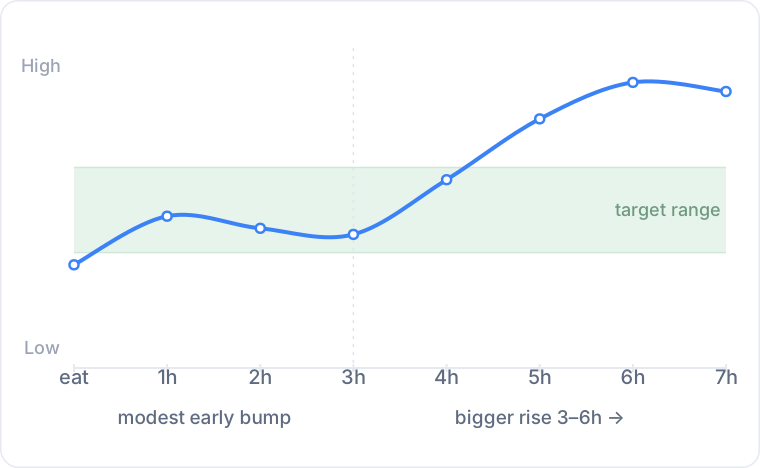
When a meal doesn't follow the fast-carb shape, it can feel like the rules broke, but they haven't. A meal with real fat and protein just runs on a slower clock.
What the delayed spike feels like
Often, nothing, until it's high. The early part of the meal behaves, so you feel like it went well. There's no warning sensation for the second climb, and if it lands overnight you may sleep straight through it and wake up high.
A few clues that point toward a fat-and-protein rise rather than something else:
- Your glucose was fine at the two-hour check, then climbed later.
- The rise follows a meal that's high in both fat and protein.
- The climb is slow and stubborn, not a sharp post-meal spike.
- A standard correction dose seems to take a long time to bring it down.
This is exactly the kind of pattern that stayed hidden before continuous monitoring, when a single two-hour finger-stick was the whole story.
Why fat and protein raise blood sugar in type 1 diabetes
Two separate mechanisms are working on that later climb.
Fat changes when the rise happens. It delays how fast your stomach empties, so the carbohydrate that is on the plate is absorbed gradually instead of arriving all at once. Fat also appears to reduce insulin sensitivity for several hours, meaning the insulin you took does a little less than usual. The result is a lower early peak and a longer rise that shows up late.
Protein doesn't contain glucose, but it can still raise it. In type 1 diabetes, after a large protein meal your liver converts some of the amino acids into glucose over several hours. This is glucose your carb count never accounted for, arriving well after you ate.
The additive effect: when fat and protein stack
Fat and protein don't just sit side by side; their effects add up. Research in type 1 diabetes has shown they are additive: a meal high in both fat and protein pushes glucose higher and for longer than either one would alone (Smart et al., 2013). Reviews of the evidence describe high-fat, high-protein meals raising the glucose response by roughly 40% over the 12 hours after eating, with the biggest difference several hours in (Bell et al., 2015).
That's the salmon-and-avocado dinner in a nutshell. The rice gave you an early, manageable bump. The fat and protein wrote the second half of the curve.
Why pizza is the classic delayed spike
Pizza is the meal people ask about most, and for good reason. A single slice stacks every ingredient of a delayed rise into one bite: fast carbohydrate from the crust for an early bump, then a heavy load of fat and protein from the cheese, oil, and toppings that slows digestion and keeps glucose climbing for hours. The crust can even fool you into thinking your dose worked, right before the fat and protein take over. Bigger portions make it worse, because these effects scale with how much you eat. It's why pizza and blood sugar is such a common struggle in type 1 diabetes, and why an extended bolus comes up so often as the fix.
Pizza is the classic example, but burgers, creamy pasta, curry, fried chicken, and sushi with rich sauces can all produce the same delayed rise, whenever a meal is high in both fat and protein.
What the delayed spike is often confused with
Three different things can leave you high after dinner, and they call for different responses. Telling them apart is most of the battle.
| Delayed fat/protein rise | Dawn phenomenon | Under-bolus (carb count off) | |
|---|---|---|---|
| When it rises | 3 to 6 h after a fatty, high-protein meal | 3 to 8 a.m., regardless of dinner | Right after eating (0 to 2 h) |
| Early post-meal (0 to 2 h) | Often fine or a modest bump | Not meal-related | High early and fast |
| Trigger | High fat plus high protein | Pre-waking hormones | Too little insulin for the carbs |
| Typical fix | Split or extended bolus, more insulin for the meal | Adjust overnight basal | Recheck carb count and ratio |
If the rise only happens after certain meals, fat and protein are the likely culprit. If it happens most mornings no matter what you ate, that's the dawn phenomenon. If you spike hard in the first hour, your carb estimate or ratio is the place to look first.
How to tell if your delayed spike is from fat or protein
Your CGM already recorded the answer. You just have to read it in context.
- Line the rise up against the meal. Note when you ate and when the second climb began. A gap of three to six hours after a fatty, protein-heavy meal is the signature.
- Check the early hours. If the first two hours looked fine and the climb came later, that points away from a simple under-dose.
- Repeat the same meal. Order the same pizza again next week and watch whether the same shape returns. A pattern that reappears under similar conditions is far more informative than a single night.
One high evening doesn't prove anything on its own. Stress, a bigger portion than usual, an off carb estimate, or alcohol can all produce a late rise. It takes a repeating pattern to justify a change, not one isolated reading. When the same slow climb follows the same type of meal several times, you're looking at a fat-and-protein effect you can plan for.
How to dose for it (and what not to do)
First, the mindset: none of this is a reason to fear a balanced plate. Fat and protein actually slow the early spike, which many people find easier to manage. The goal is simply to dose for the meal you're actually eating. And because these strategies change how much insulin is working later, they're conversations to have with your care team, not solo experiments.
Start with what not to do. Don't just pile more insulin onto the front of the meal to chase the eventual high. A big upfront dose meets very little glucose in the first two hours and can drop you low before the delayed rise even arrives. Don't slash the meal's carbs to compensate either, and don't change two variables at once.
When you've confirmed the pattern, the usual levers are:
- Pump users can use a split or extended bolus (a dual-wave or square-wave). Part of the dose covers the carbs up front, and the rest is stretched over the next few hours to meet the delayed rise. Getting the split and duration right takes some trial and error with your team.
- MDI (injection) users have blunter tools, but options exist. Some people take a smaller top-up injection a couple of hours into the meal, and pre-bolusing timing can help the early carbs. This needs closer guidance to stay safe.
- Counting fat and protein. Some people estimate the extra insulin these meals need using fat-protein units (the Warsaw method). It's an advanced technique and one to learn with a diabetes educator rather than improvise.
- Watch the tail, not just the two-hour mark. The action happens between hours three and six, so that's the window to keep an eye on.
There's no single perfect bolus pattern here, and even the research is mixed on the exact best approach, because how much a meal affects you depends on the food, the timing, and your own physiology. Even two of the same pizza can behave differently depending on crust, toppings, portion size, exercise, insulin on board, and whether you're unwell or at a different point in your menstrual cycle. That's why a repeating pattern tells you far more than any single meal.
Can you prevent the delayed spike?
Not by changing the food's chemistry. Fat will always slow digestion, and protein will always give your liver something to work with, so the delayed rise is baked into how these meals digest.
What you can change is how you meet it. That might mean adjusting the timing and shape of your insulin, being more deliberate on the meals you already know spike you late, or occasionally rebalancing a plate if a particular combination is consistently hard to cover. The aim isn't to avoid pizza forever, just to stop the second half of the curve from catching you by surprise.
How Glynce helps you see the pattern
The tricky part is the timing, not the biology. The delayed rise hides after the two-hour check, and it only becomes obvious when you connect it back to what was on your plate.
The clearest way to catch it is to see your glucose curve lined up against the meal that caused it, then compare the same meal across different days. That's the view Glynce is designed to provide. Because it tracks the shape of your response rather than a single reading, a delayed fat-and-protein climb shows up plainly on the graph instead of getting lost in the evening. Over time, comparing similar meals side by side is what turns "why did that happen?" into "I know how pizza treats me, and I dose for it."
Frequently asked questions
Why does pizza raise blood sugar hours later?
Pizza pairs fast carbohydrate from the crust with a large amount of fat and protein from the cheese and toppings. The carbs give an early bump, then the fat slows digestion and the protein prompts your liver to release glucose, so the rise can keep going for three to six hours or more. It's one of the hardest meals to dose for in type 1 diabetes, and many people cover it with an extended bolus.
Can fat and protein raise blood sugar with no carbs at all?
Yes, in type 1 diabetes a large protein or fat load can raise glucose even without carbohydrate, because protein prompts the liver to release glucose and fat slows things down and reduces insulin sensitivity. The effect is usually smaller and slower than a carb spike, and it matters most with big portions.
How long after eating does a high-fat meal raise blood sugar?
The delayed rise typically shows up three to six hours after eating, and very large high-fat, high-protein meals can keep influencing glucose for up to eight to twelve hours. That's why these meals can affect you overnight, long after dinner is over.
Should I take more insulin for pizza?
Many people with type 1 diabetes do need more insulin for high-fat, high-protein meals than the carb count alone suggests, and often need part of it delivered later. How much more, and how, is very individual, so work it out with your care team rather than guessing.
Is a delayed spike the same as the dawn phenomenon?
No. A fat-and-protein rise is tied to a specific meal and shows up hours after eating, while the dawn phenomenon is driven by pre-waking hormones and happens in the early morning regardless of what you ate. On your CGM, one tracks back to dinner and the other starts after 3 a.m.
What are fat-protein units?
Fat-protein units (FPUs) are a way of estimating the extra insulin a high-fat, high-protein meal needs, on top of the carb dose, often delivered as an extended bolus. It's an advanced approach best learned with a diabetes educator, since getting it wrong can cause delayed lows.
What you can do this week
Pick one meal you suspect. Pizza is the classic. The next time you eat it, note the time, dose the way you normally would, and then just watch the next six hours on your CGM instead of only the two-hour mark.
Do it again the following week with the same meal. If the same slow climb shows up both times, you've found a real pattern, not a one-off, and you've got something concrete to bring to your care team.
The delayed spike isn't random. Once you recognize its shape on your CGM, it becomes one of the most predictable glucose patterns you'll meet, and one you can plan for instead of react to.
Keep reading
- How to Read Your CGM: A Guide to Common Glucose Patterns. The overview this pattern belongs to.
- Pizza and Blood Sugar: Why It Spikes Hours Later. The classic version of this pattern, in depth.
- What Is an Extended Bolus, and Why Do Fatty Meals Need One?. How people match insulin delivery to the delayed rise.
- Dawn Phenomenon: Why You Wake Up With High Blood Sugar. The other reason your glucose climbs when you didn't eat anything.
This article is for education, not medical advice. Talk to your diabetes care team before changing your insulin doses or timing.
Sources
- Smart CE, et al. Both dietary protein and fat increase postprandial glucose excursions in children with type 1 diabetes, and the effect is additive. Diabetes Care, 2013.
- Bell KJ, et al. The role of dietary protein and fat in glycaemic control in type 1 diabetes: implications for intensive diabetes management. Current Diabetes Reports, 2015.
- Wolpert HA, et al. Dietary fat acutely increases glucose concentrations and insulin requirements in patients with type 1 diabetes. Diabetes Care, 2013.